
QR menus for restaurants and bars, without the PDF
Why a QR code pointing at a PDF is worse than a paper menu, and what a menu built as a web page does instead.
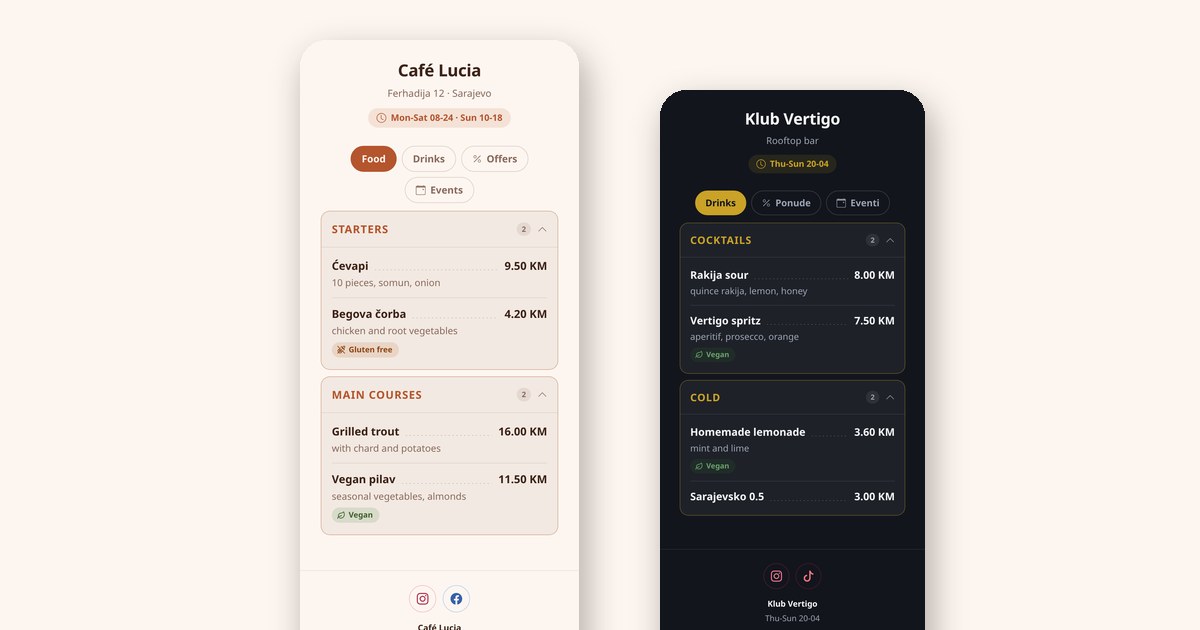
Most QR menus are a QR code pointing at a PDF, and a PDF is the wrong format for a phone. It opens in a viewer rather than the browser, it arrives as a page sized for A4 that has to be pinched and dragged, and changing one price means re-exporting the whole document and re-uploading it.
The picture above is two menus from DIVERD QR Code Studio: a café and a rooftop bar, each on its own address, each a web page rather than a file.
What a menu as a page does that a PDF cannot
- It fits the phone it is read on. Sections fold open, prices sit against the right edge, and nothing needs zooming.
- It changes in a minute. Sold out of the trout? Untick it. The code on the table already points here, so nothing is reprinted and no code is replaced.
- It shows two currencies. Prices are set and charged in convertible marks, with an approximate euro (and other currencies you choose) conversion a guest can switch to. Useful in any town with tourists in it.
- It carries allergens and diet tags. Vegan, gluten free, and the rest, on the item rather than in a separate document nobody asks for.
- It has offers and events. A promotion that runs until Sunday, or a set on Friday night, in tabs beside the food — and they disappear on their own when the date passes.
The address is the point
Each menu gets a short public address of its own — qrcode.diverd.dev/m/your-venue/ — and that matters for a reason that is easy to miss: somebody will eventually type it in. The camera will not focus, the code will be scratched, the light will be wrong. A short address printed under the code is the fallback, and a menu whose URL is forty characters of random has no fallback at all.
What it looks like on a table
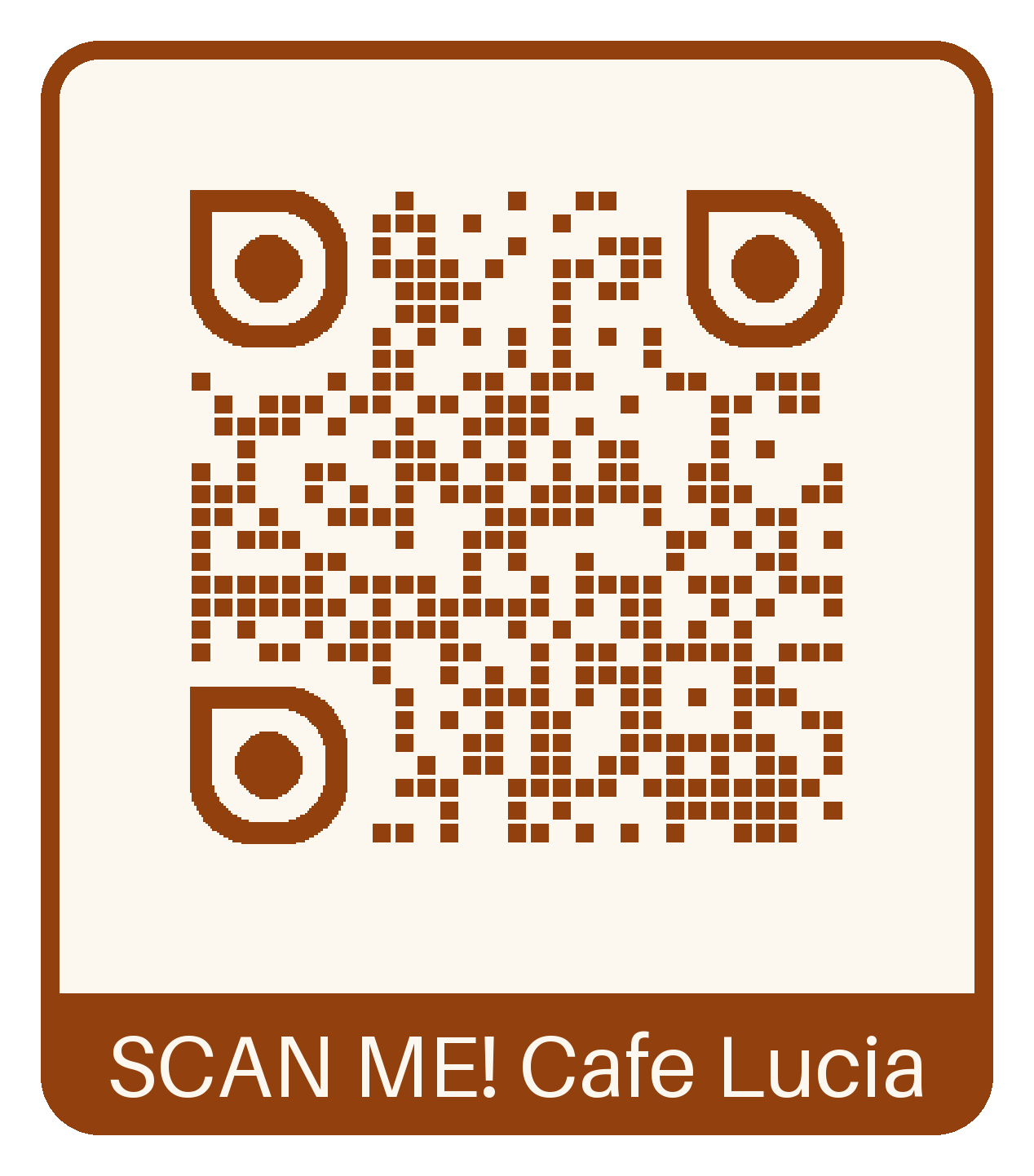 A code on a card, a table sticker, or the window. The studio's frames include labelled ones, and a labelled code is worth more than a bare one: "Scan for the menu" answers the question a guest has before they have asked it.
Print it big enough. A code that works on a phone screen at arm's length may not work on a card in candlelight, which is the light most restaurants actually have.
Scan QR Code for Café Lucia to visit example menu or click here
What it does not do
It is not a till, it does not take orders, and it does not process payments. It is the menu — the thing guests read before they decide — and it is built to do that one job on a phone.
If ordering or payments is what you are after, that is a different build, and worth a conversation rather than a subscription.
See the studio or book a walk-through and we will set a menu up on the call.